Thursday, April 15, 2021

Thursday, March 25, 2021
Friday, January 22, 2021
How To Straighten an overbite - Brit Phillips DDS
Have you ever thought of asking someone how to straighten an overbite? This problem often occurs among the more elderly, but it can happen to anybody. Overbite occurs when a person's bite turns inward too much while chewing. Usually this happens because the lower jaw has moved forward over the upper teeth, causing the bite to turn inward. Straightening an overbite can help improve your facial features and make you look more attractive, so it's worth it.
An overbite commonly occurs among younger people - particularly those with narrow jaws. The teeth tend to appear as if they are sticking out past the overbodices of the mouth. In addition to being unattractive, an overbite can also be quite a source of pain, since the misaligned teeth make it hard to open the mouth wide enough to take a good bite.
Some people also suffer from underside, which occurs when the width of the teeth isn't the same all the way around. Underbites usually appear when the upper teeth have started to move outward, while the lower teeth stay within their own bone. When the overbite is paired with underbite, the result can be a 'hollow' smile, where the overbite extends far beyond the level of the chin.
As you can see, both overbite and underbite are caused by a bone that isn't aligned right. The easiest way to fix the misalignment is to use braces to straighten the teeth out. Braces aren't always effective, however, so in some cases you may need to resort to using traditional therapies. If your teeth are crooked, you should consider going to an orthodontist for a specialized cleaning procedure to get the bone back into place and to straighten the teeth.
The overbite can be corrected through a simple bite re-rection. It's not a common treatment, but if it's something you need, try asking your dentist about it. In most cases, bones take time to shift into their new positions. That's why it's important to try to straighten the bite as early as possible. Overbite correction typically takes more than one treatment.
If you know that you have an overbite, you may be tempted to just let go with straightening the teeth and hoping for the best. This isn't a good idea, though. If you're trying to straighten an overbite, you'll want to get braces soon, or you'll have to deal with chronic crooked teeth for the rest of your life. Even if you get braces eventually, you may end up with an underbite later on down the road, due to the fact that your bones eventually shift back to their original positions. This can lead to more wear and tear on your teeth than you might have initially expected.
Instead, when you start looking for how to straighten an overbite, start by consulting an orthodontist. These professionals are used to helping patients with crooked, crowded or misaligned teeth. They have the tools, experience and knowledge necessary to determine what the best course of action is for your situation. An orthodontist can run several tests on your mouth, and with the help of your dentist and the orthodontist office staff, recommend the best course of action.
You may also find that your orthodontist can provide you with a great deal of information regarding general orthodontics in general. Your jaw problems are very likely to be a minor part of your overall mouth structure problem. By learning more about the mechanics of your mouth structure, you can make better decisions for improving the look and function of your teeth and mouth. So, if you want to learn how to straighten an overbite, talk to your dentist and orthodontist and see how they can best help you. Brit Phillips DDS
6610 Bryant Irvin Road # 100 Fort Worth, TX 76132
(817) 361-1999
https://bestdentistsfortworth.com
https://goo.gl/maps/ByvMwarP6n3mERKK8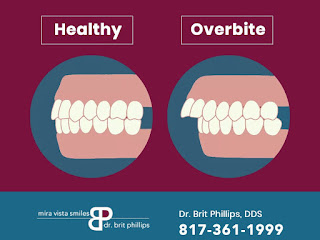
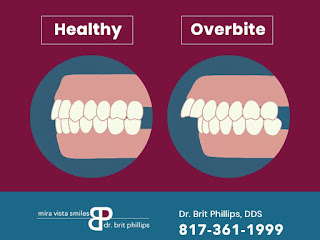 How To Straighten an Overbite
An overbite commonly occurs among younger people - particularly those with narrow jaws. The teeth tend to appear as if they are sticking out past the overbodices of the mouth. In addition to being unattractive, an overbite can also be quite a source of pain, since the misaligned teeth make it hard to open the mouth wide enough to take a good bite.
Some people also suffer from underside, which occurs when the width of the teeth isn't the same all the way around. Underbites usually appear when the upper teeth have started to move outward, while the lower teeth stay within their own bone. When the overbite is paired with underbite, the result can be a 'hollow' smile, where the overbite extends far beyond the level of the chin.
As you can see, both overbite and underbite are caused by a bone that isn't aligned right. The easiest way to fix the misalignment is to use braces to straighten the teeth out. Braces aren't always effective, however, so in some cases you may need to resort to using traditional therapies. If your teeth are crooked, you should consider going to an orthodontist for a specialized cleaning procedure to get the bone back into place and to straighten the teeth.
The overbite can be corrected through a simple bite re-rection. It's not a common treatment, but if it's something you need, try asking your dentist about it. In most cases, bones take time to shift into their new positions. That's why it's important to try to straighten the bite as early as possible. Overbite correction typically takes more than one treatment.
If you know that you have an overbite, you may be tempted to just let go with straightening the teeth and hoping for the best. This isn't a good idea, though. If you're trying to straighten an overbite, you'll want to get braces soon, or you'll have to deal with chronic crooked teeth for the rest of your life. Even if you get braces eventually, you may end up with an underbite later on down the road, due to the fact that your bones eventually shift back to their original positions. This can lead to more wear and tear on your teeth than you might have initially expected.
Instead, when you start looking for how to straighten an overbite, start by consulting an orthodontist. These professionals are used to helping patients with crooked, crowded or misaligned teeth. They have the tools, experience and knowledge necessary to determine what the best course of action is for your situation. An orthodontist can run several tests on your mouth, and with the help of your dentist and the orthodontist office staff, recommend the best course of action.
You may also find that your orthodontist can provide you with a great deal of information regarding general orthodontics in general. Your jaw problems are very likely to be a minor part of your overall mouth structure problem. By learning more about the mechanics of your mouth structure, you can make better decisions for improving the look and function of your teeth and mouth. So, if you want to learn how to straighten an overbite, talk to your dentist and orthodontist and see how they can best help you.

6610 Bryant Irvin Road # 100 Fort Worth, TX 76132
(817) 361-1999
https://bestdentistsfortworth.com
https://goo.gl/maps/ByvMwarP6n3mERKK8
Subscribe to:
Comments (Atom)